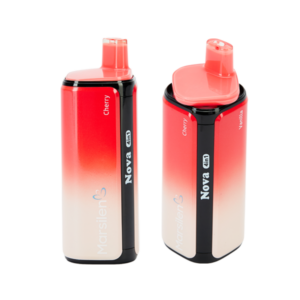
Finding a better Marsilen price starts with comparing the same product specification, not the largest discount label. Check the final delivered price, liquid volume, nicotine strength, package quantity, seller identity, tax, shipping, and return terms. In Spain, rules based on the EU framework limit nicotine e-liquid to 20 mg/ml, disposable cartridges or tanks to 2 ml, and refill containers to 10 ml; Spanish packaging rules also require health warnings covering 30% of specified exterior surfaces. Since Spain introduced a specific e-cigarette-liquid tax framework in 2025, tax treatment can materially change the price shown at checkout.
A €14 listing and an €18 listing cannot be compared properly until shipping, quantity, product specification, and tax are placed on the same basis. If the €14 product carries €7 delivery while the €18 product ships for €2, the delivered totals become €21 and €20. A 22% lower shelf price has therefore produced a higher final payment. The useful figure is delivered cost per identical unit, especially when several sellers use different pack sizes.
| Offer | Listed price | Shipping | Units | Delivered cost per unit |
|---|---|---|---|---|
| Seller A | €14 | €7 | 1 | €21.00 |
| Seller B | €18 | €2 | 1 | €20.00 |
| Seller C | €54 | €6 | 3 | €20.00 |
That comparison should come before percentage promotions. A store may display “30% off” after reducing a reference price from €30 to €21, while another retailer may sell the same specification for €19 without a sale badge. The discount percentage describes the relationship with the seller's own reference price; it does not establish the lowest market price. For products sold during 2025 or 2026, compare the current checkout amount against several sellers rather than relying on crossed-out prices.
Product specifications come next because a lower price can reflect a different product rather than a better offer. Check the precise Marsilen model, liquid capacity, nicotine concentration, device type, package count, labeling, and market version. Spain's regulatory framework allows nicotine concentrations up to 20 mg/ml and limits disposable cartridges or tanks covered by the rules to 2 ml, while refill containers are capped at 10 ml. A listing that describes a materially different capacity needs separate verification rather than a direct price comparison.
The same check matters when searching for a disposable vape in spain. Product availability alone does not establish that a particular listing meets local requirements. Spanish rules cover composition, labeling, safety measures, and sales restrictions, while the EU tobacco-product framework has shaped e-cigarette requirements for more than a decade. In Spain, health-warning presentation has included a 30% surface requirement, alongside child-resistant safety provisions. Those details are more useful for checking a listing than promotional phrases about capacity or performance.
Price comparisons in Spain also changed after the 2025 tax measures covering e-cigarette liquids. Spanish excise legislation sets a rate of €0.15 per ml for e-cigarette liquid containing no nicotine or up to 15 mg/ml, and €0.20 per ml when nicotine concentration exceeds 15 mg/ml. A 2 ml liquid volume can therefore carry €0.30 or €0.40 of this specific excise component before considering other parts of the retail price.
A difference of €0.10 per ml looks small until quantity is included. At 20 ml of taxable liquid, the difference between the €0.15 and €0.20 bands is €1.00; at 100 ml, it becomes €5.00.
That tax structure explains why older price comparisons can be misleading. A blog post, screenshot, or forum discussion published in 2023 or early 2024 may show prices formed before Spain's newer e-cigarette-liquid excise rules applied. Spain's Law 7/2024 established the new tax framework with effects connected to 2025 implementation, and the Spanish tax authority specifically referred to management of the new duty during its 2025 control plan. Current checkout prices are therefore more useful than historical “normal prices.”
Seller information should then be checked with the same care as price. Look for an identifiable business name, physical or registered contact information, clear delivery terms, age-verification procedures where legally required, refund conditions, and a product page that states specifications consistently. If five sellers cluster around €18–€22 and an unknown seller lists an apparently identical item at €9, the 50% price gap is a reason to compare product origin, tax treatment, packaging, and seller details before paying.
Packaging provides another comparison point because regulated nicotine products are not ordinary unlabelled consumer goods. Spanish implementation rules have required health warnings and child-resistant features, with nicotine limits of 20 mg/ml and disposable cartridge or tank limits of 2 ml. Missing regulatory information, unclear package photographs, inconsistent nicotine figures, or a description that changes between the product page and checkout should be resolved before price becomes relevant.
Multi-unit pricing requires arithmetic rather than assumptions. A single unit at €21 costs €21 per unit. A 3-pack at €57 costs €19 each, a 9.5% reduction. A 5-pack at €90 costs €18 each, about 14.3% less than the single-unit price. Buying five units still requires €90 upfront, so the larger pack is cheaper per unit only when the quantity would otherwise have been purchased.
| Pack | Total | Unit cost | Saving vs. €21 single |
|---|---|---|---|
| 1 unit | €21 | €21.00 | 0% |
| 3 units | €57 | €19.00 | 9.5% |
| 5 units | €90 | €18.00 | 14.3% |
Shipping thresholds can create the same effect. Suppose delivery costs €6 below a €60 order and becomes free above €60. Raising a €42 basket to €63 to remove a €6 fee increases spending by €15 after accounting for the avoided delivery charge. In that example, “free shipping” does not reduce the amount paid. During 2025 and 2026, comparing the final payment remains more reliable than comparing delivery labels.
Spend €21 more to save €6 on delivery, and the bank-card charge still rises by €15. The shipping percentage looks better; the purchase costs more.
Coupons deserve similar treatment. A 10% code applied to a €50 order removes €5. A €10 fixed discount on the same basket removes twice as much. On a €120 order, however, 10% removes €12 and becomes the better offer. Minimum-spend conditions can change the result again: increasing a planned €45 order to €60 solely to activate €6 off raises total product spending by €9 before shipping differences are considered.
Return terms become relevant when two prices are close. If Seller A charges €19 and Seller B charges €20, the difference is only 5%. Clear procedures for damaged deliveries, incorrect items, unopened returns, and customer contact may matter more than that €1 gap. E-cigarette products can also have stricter return conditions after seals are opened, so the policy should be read before payment rather than after a problem appears.
Payment method can add another measurable difference. A retailer charging a 2% processing or currency-conversion cost turns a €100 basket into €102 before any bank-side foreign-exchange charge. When buying from a seller outside the buyer's billing currency, compare the card issuer's conversion rate, merchant conversion option, and any fixed foreign-transaction fee. A nominal 5% product saving can disappear after 2–3% payment costs plus higher delivery.
Stock age and storage information deserve attention when a discount is unusually large. A 35% clearance reduction may be commercially reasonable when a retailer is changing inventory, but the buyer still needs the same model, intact packaging, readable labeling, and credible storage history. Price alone cannot confirm those points. Asking the seller for batch or packaging information can be more useful than searching for another 3% coupon.
Comparing at least three to five current offers gives a more stable market reference than using one seller's “regular price.” If five comparable listings are €18, €19, €20, €21, and €22, the median is €20. A €19 offer is 5% below that midpoint; a €12 offer is 40% below it and deserves additional checking because the gap is far larger than the surrounding range.
A practical purchase sheet can therefore contain only eight fields: exact model, nicotine strength, liquid volume, pack quantity, product price, shipping, tax or fees, and final delivered total. Add the seller's return terms and business details beside the numbers. For 2025-era Spanish purchases, including the €0.15/ml or €0.20/ml excise category where applicable also makes comparisons easier to audit.
The strongest price comparison is the one that still looks good after every charge has been added. An offer that is 8% cheaper before delivery can become 4% more expensive after shipping; a 15% bulk saving can require buying twice the planned quantity; a 30% promotional label can still leave the item above the market median. Comparing identical specifications, delivered cost per unit, current Spanish tax treatment, compliant labeling, and seller terms produces a price figure that can actually be checked rather than a discount percentage that exists only on the product page.